
Energy transition in the panel discussion: Which questions now belong on the stage?
Grids, storage, costs, hydrogen, and the role of companies: The energy transition offers plenty of material for discussion. The crucial question is which questions will truly advance a panel discussion.

The energy transition has been discussed for years. But the questions are changing. We are in the midst of a fundamental transformation of our energy system. Renewable energies are taking over an ever-increasing share of the electricity supply, while at the same time grids, storage, heat supply, mobility and industrial processes are changing.
Besides expanding renewable energies, the focus today is increasingly on how the energy system as a whole should function: How do generation, grids, storage, and consumption fit together? How are the necessary investments financed? What role does hydrogen play? And what does this transformation mean specifically for companies?
That's precisely why I find this topic so exciting for panel discussions. Here, technical, economic, and political perspectives converge directly.
The challenge in preparation is therefore less about: What other aspects of the energy transition can we mention? But rather: What questions do we need to ask to create a genuine discussion on stage?
Discussing the energy transition: Implementation takes center stage.
Many goals have been formulated. For me, the interesting part of the presentation will be when we talk about implementation.
A good example of this is the energy grid. Currently, electricity, gas, and hydrogen are being planned more closely together. The scenario frameworks for 2040 and 2045, currently under consultation, consider development paths for both infrastructures and, in some cases, coordinate them. At the same time, new electricity consumers and storage facilities are changing demand: Grid operators anticipate, among other things, a continued boom in data centers and large-scale battery storage.
For a panel discussion, this results in a much more concrete starting question than a general "How do we achieve the energy transition?":
What does our energy system need now so that the transformation works in practice?
Several exciting discussions can be developed from this question.
Energy transition in the panel discussion: Which questions belong on the stage now?
How do we develop the appropriate energy infrastructure?
Generation and consumption are changing simultaneously. Renewable electricity is produced in different places and at different times than energy from conventional power plants. At the same time, electrification is increasing electricity demand in new sectors.
This makes infrastructure a crucial issue for the energy transition.
And it's no longer just about power lines. The development of gas and hydrogen infrastructure must also be considered. For example, the draft of the currently consulted gas and hydrogen network development plan envisions a hydrogen transport network of over 9,000 kilometers by 2037. At the same time, the Federal Network Agency describes the market ramp-up of hydrogen as delayed. (Source: Federal Network Agency)
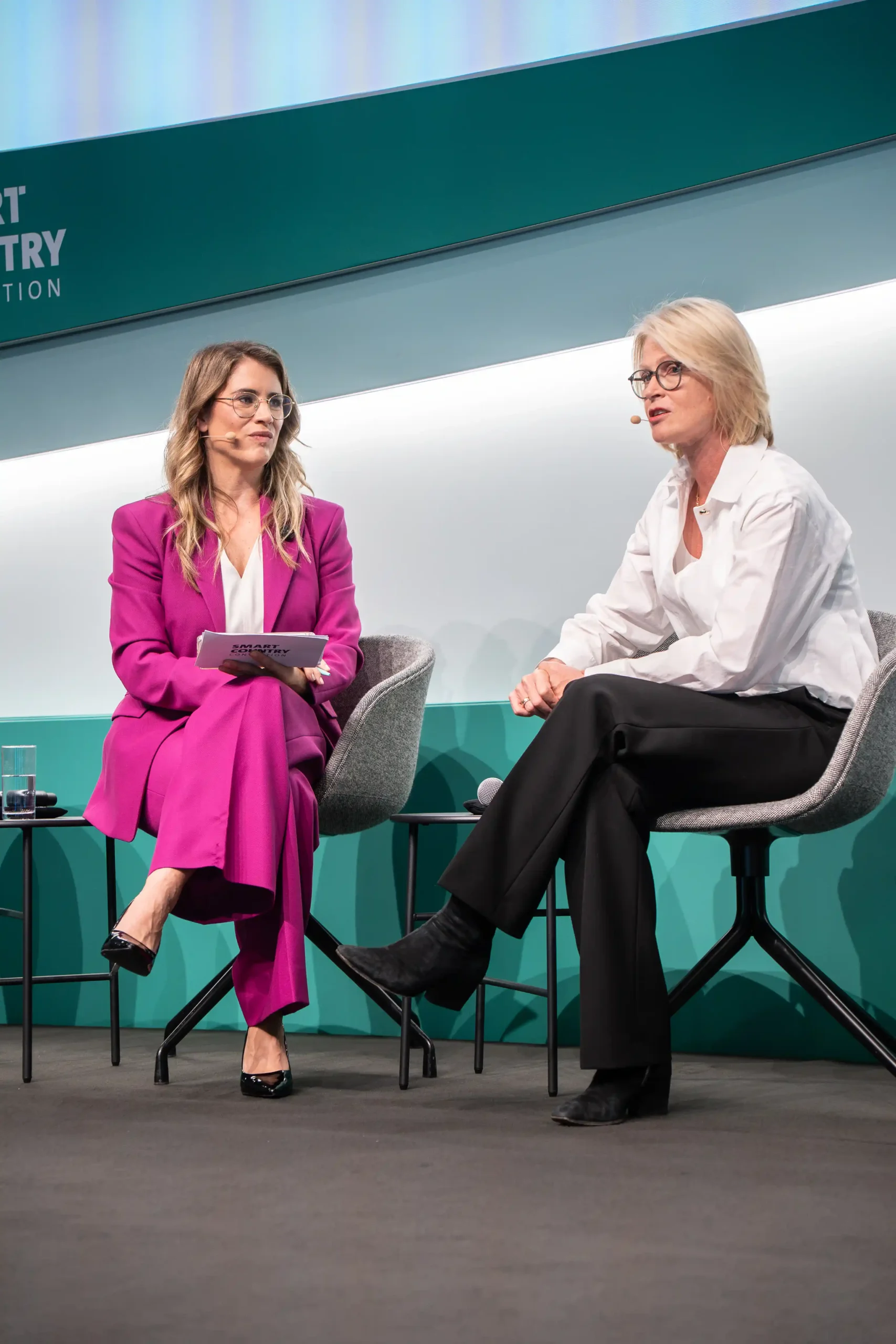
Questions for the panel:
What infrastructure will we really need in the coming years?
Where will network expansion become a decisive factor for companies and new projects?
Which applications should be electrified and where is hydrogen needed?
How can electricity and hydrogen infrastructure be meaningfully integrated?
What decisions need to be made today to ensure that infrastructure is available on time?
What role do storage and flexibility play?
As more and more electricity is generated from wind and solar power, production and consumption must still be balanced at all times. This makes flexibility increasingly important. The Federal Network Agency explicitly points out that with a higher share of fluctuating renewable energies, the flexibility requirements of the electricity system also increase.
The discussion shouldn't automatically end with battery storage. Flexible consumers, industrial processes, electric vehicles, heat pumps, and exchange with European neighbors can also play a role.
The currently consulted scenarios make the development particularly tangible: Network operators expect significantly higher outputs from large battery storage systems than in the previous scenario framework.
Therefore, the following questions are interesting:
Where do we actually need storage and where can flexible consumption help?
What flexibility can companies provide?
What business models are emerging around storage and flexible electricity use?
What incentives are needed to ensure that electricity is consumed when it is available in the system?
How does flexibility change the requirements for networks and energy companies?
Who bears the costs and what incentives do we offer?
The transformation of the energy infrastructure requires significant investments. At the same time, the question arises as to how these costs are distributed and what incentives the system provides.
One of the most important current changes is AgNes, the reform of the General Network Charges System for Electricity. The existing rules largely date back to 2005 and are therefore suited to an energy system that looks fundamentally different today. Electricity is increasingly generated decentrally and depending on the weather, grid connection capacities are becoming scarcer, and flexible consumers and storage facilities are gaining in importance.
With AgNes, the Federal Network Agency is therefore further developing the system for distributing electricity grid costs. The current draft regulation includes, among other things, new incentives for grid-oriented behavior and flexibility, as well as a revised distribution of grid costs. The new system is intended to replace the existing provisions of the Electricity Grid Fee Ordinance from 2029. The final framework is scheduled for the end of 2026.
The sheer scale of the issue demonstrates its relevance: According to the Federal Network Agency, network charges represent an annual cost volume of approximately 37 billion euros.
This is excellent material for a panel discussion because different interests directly clash here.

For example, with these questions:
How should network costs be distributed in the future?
What price signals do businesses and consumers need?
How can we create incentives for flexible electricity consumption?
How can investments in new technologies remain predictable?
What do energy and network costs mean for the competitiveness of companies?
What changes will the reform of network charges by AgNes bring for companies and consumers?
This allows us to further consider the cost issue: We are not only talking about who pays, but also about what behavior and investments a future energy system should promote.
What role will hydrogen actually play?
Hardly any energy topic has been associated with as many expectations in recent years as hydrogen.
The discussion is now becoming more concrete. Current scenarios assume significantly lower electrolyzer capacities than before and, at the same time, a significant dependence on hydrogen imports. The Federal Network Agency also speaks of a delayed market ramp-up.
In my view, this makes the questions for a panel even more interesting:
Where is hydrogen truly indispensable?
Which applications can be more effectively electrified directly?
What infrastructure still needs to be built today?
How does a market develop as long as supply and demand have to be built up simultaneously?
What role will imports play?
What does the energy transition mean specifically for companies?
At a business or corporate conference, I would go one step further.
For companies, the energy transition is not just about political goals. It affects investments, production processes, locations, and in some cases, entire business models.
Therefore, I find questions that lead directly to practical application more interesting:
What investment decisions are you making differently today compared to five years ago?
How does energy infrastructure affect your location decisions?
Which energy solutions are already working in your company?
What new business models are emerging as a result of the transformation of the energy system?
Which energy solutions are already working in your company?
A good energy panel needs different perspectives.
For me, a discussion becomes particularly interesting when it takes place on stage. different perspectives on the energy transition come together.
A grid operator views the energy system from a different perspective than an industrial company. An energy supplier brings different experience to the table than a technology company. Policymakers focus on the framework conditions, while scientists analyze developments and outline possible scenarios.
The role of the moderator is to bring these perspectives into conversation with one another and to address the points where they intersect or where different viewpoints become clear.
For example, if a company requests a faster network connection, the next question can be directed to the network operator: What conditions are needed to enable faster implementation of network connections?
When it comes to greater flexibility in the energy system, we can directly ask further questions: Who can provide this flexibility and what business models can emerge from it?
It is precisely at these interfaces that I continue to ask questions. This clearly shows how companies, politicians, network operators and scientists view the same challenge, what experiences they bring from their respective practices and what solutions can be derived from them.
Good questions about the energy transition become concrete
When dealing with a major topic like the energy transition, it's crucial on stage to steer the discussion toward concrete aspects. For me, therefore, preparation begins with the question: What should the audience understand better after this conversation than before?
This determines the appropriate focus for the panel and which aspects I want to explore in more depth with my discussion partners. I am particularly interested in the implementation: What is actually changing right now? What experiences are those involved having in practice, and where are the crucial levers for change?
In my moderation, I address these points, establish connections between the different perspectives, and delve deeper into the discussion where technically interesting questions arise.
Technical preparation makes a difference with energy panels.
The energy transition involves closely intertwined technical, economic, and political issues. Discussions about grids quickly lead to discussions about investments and costs. For renewable energies, storage and flexibility are crucial, while for hydrogen, infrastructure, availability, and economic viability are equally important. Therefore, a good understanding of these connections is important for the moderator., in order to classify statements and ask further questions at the relevant points in the conversation.
That's precisely why I'm involved intensively involved with energy, energy transition and sustainability for several years. I have already moderated numerous events and expert discussions in this field and have continuously expanded my knowledge. To this end, I regularly attend [events/conferences/etc.]. Specialized seminars and training courses, including multi-day seminars, in which I delve deeply into energy and sustainability issues. I also continuously follow current developments and debates in the industry.
Before each moderation session, specific preparation for the respective topic is required. I research the companies and institutions involved, examine the professional backgrounds of my interview partners, and identify which perspectives and connections are particularly relevant to the respective discussion.
This connection from many years of moderation experience, continuous professional development and intensive preparation This gives me the basis to quickly grasp the connections even in complex energy topics, to classify statements and to continue the conversation on the technically interesting points.

Are you planning a panel on the energy transition?
I moderate Panels, congresses and specialist events on energy, energy transition and sustainability and bring with me not only my many years of moderation experience but also my professional expertise in these topics.
